Bronze Sculpture for Sale

Upload an image to find similar artworks
Multicolored sculpture holds a distinctive place in contemporary creation by making color a constitutive element of volume rather than a simple surface treatment applied afterward.
Long confined to the natural tones of traditional materials such as patinated bronze, white marble, or raw stone, sculpture underwent a decisive shift toward color in the twentieth century, notably under the influence of Niki de Saint Phalle, whose “Nanas" burst with vibrant, joyful hues, as well as Pop Art artists who translated the flat color fields of mass culture into three-dimensional form.
This chromatic revolution radically transforms the viewer's relationship to the sculptural object: color draws the eye, structures volumes, creates contrasts between different parts of the work, and gives sculpture a festive, immediately accessible presence, sometimes close to the world of toys or design objects.
In contemporary practice, artists explore this dimension through a variety of materials—lacquered resin, fiberglass, painted metal, or hybrid assemblages—working with saturated palettes, gradients, or multicolored compositions that visually fragment form into distinct facets.
On Artsper, this selection brings together sculptures in which color becomes a fully-fledged visual language, highlighting the ability of volume to reinvent itself through a chromatic dimension long neglected by sculptural tradition.

Painting . 100 x 100 x 2.4 cm Painting . 39.4 x 39.4 x 0.9 inch
€1,200

Painting . 120 x 160 x 3 cm Painting . 47.2 x 63 x 1.2 inch
€3,800

Painting . 60 x 50 x 3 cm Painting . 23.6 x 19.7 x 1.2 inch
€890 €801

Painting . 100 x 100 x 3 cm Painting . 39.4 x 39.4 x 1.2 inch
€2,150

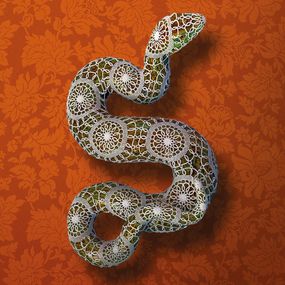
Print . 111.76 x 86.36 x 0.1 cm Print . 44 x 34 x 0 inch
€2,500


Painting . 60 x 50 x 2 cm Painting . 23.6 x 19.7 x 0.8 inch
€1,986


Print . 69.5 x 50 x 0.2 cm Print . 27.4 x 19.7 x 0.1 inch
€1,200 €960


Painting . 100 x 100 x 3.4 cm Painting . 39.4 x 39.4 x 1.3 inch
€2,970
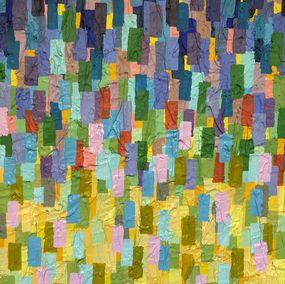
Painting . 61 x 50 x 2.4 cm Painting . 24 x 19.7 x 0.9 inch
€2,000

Painting . 90 x 120 x 2 cm Painting . 35.4 x 47.2 x 0.8 inch
€2,000
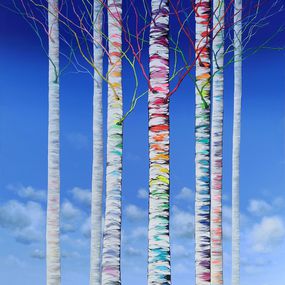
Painting . 150 x 120 x 4.5 cm Painting . 59.1 x 47.2 x 1.8 inch
€5,500

Painting . 73 x 92 x 2 cm Painting . 28.7 x 36.2 x 0.8 inch
€2,300

Painting . 80 x 140 x 4.1 cm Painting . 31.5 x 55.1 x 1.6 inch
€1,056



Choose your preferences
The art is yours
Forgot your password?
No worries, enter you email address and we'll send you a link to reset your password.
ReturnUpload an image and discover similar artworks available on Artsper