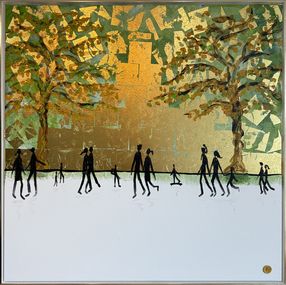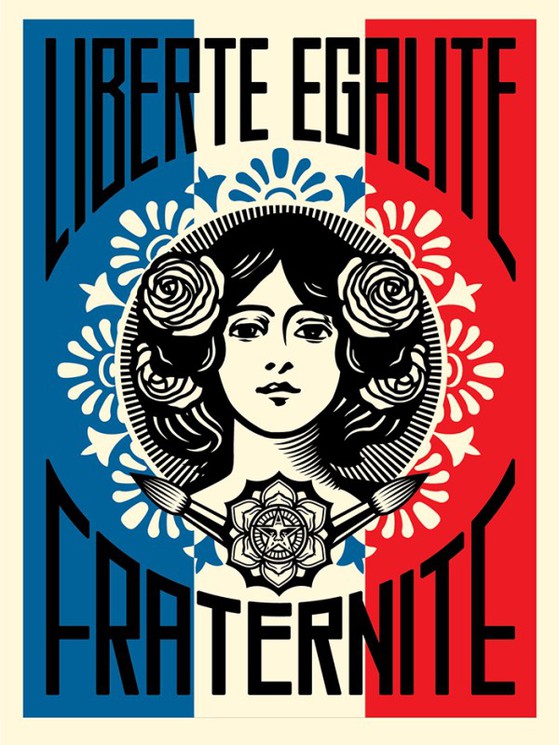
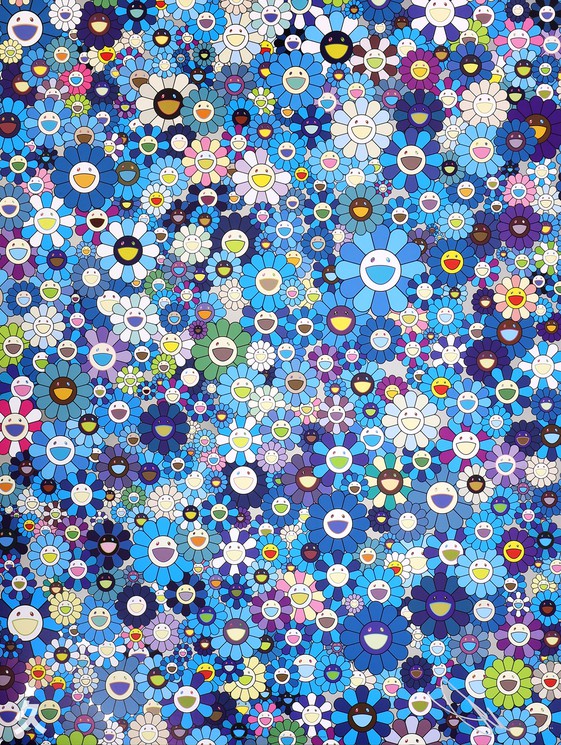
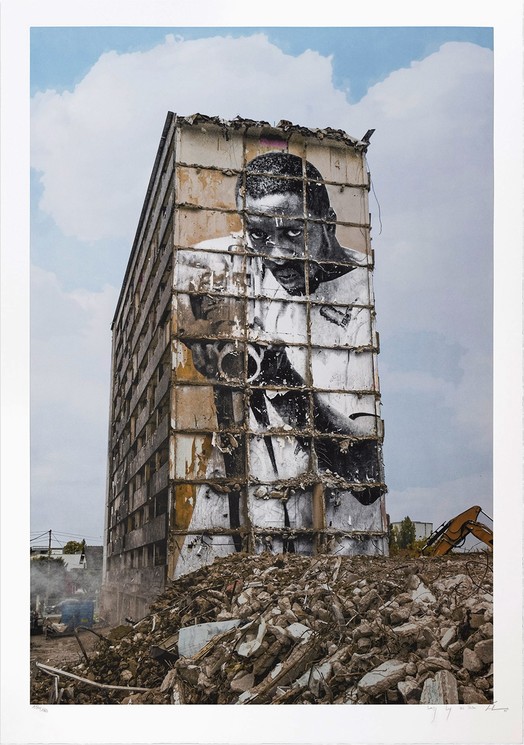
This artwork is a striking composition featuring a gold textured square centrally framed within a black and gold border. At its heart lies a mesmerizing geometric pattern, expertly crafted with intricate lines that draw the viewer in. The golden hue radiates a sense of opulence and depth, enhanced by the subtle gradation of light and shadow across the surface. The play of textures creates an illusion of movement, rendering a dynamic yet harmonious aesthetic. The precision of the design underscores a meticulous attention to detail, offering a captivating interplay between simplicity and complexity. This piece transcends mere visual appeal, inviting contemplation of its layered structure and the way light interacts with the surface. Its bold, minimalist elegance makes it a compelling focal point for modern interiors.
Untitled 23, 2019 by Francisco Larios Lacquer, Acrylic, oil, and gold leaf on MDF Deep Image Size: 9.5 in. H x 9.5 in. W Frame Size: 11.6 in. H x 11.6 in. W x 1.5 in. D One of a kind *
Mexican Ryōan-ji Series. Ryōan-ji is the Japanese Zen temple in Kyoto, a monastery that gave rise to the idea of the purely abstract Zen garden that inspired this series Francisco Larios’ works are done by hand with hundreds of layers of gold leaf. The artist’s goal is to allow the work to age along with the collector, which is why some works will appear unbalanced in color. Parts of the work will have different tones, burnish spots, or small, soft cracks.
Francisco Larios works with painting, open concept drawing and 3D modeling software. In this series of works, postmodern influences are recognized by simplified forms, lines and sacred geometry. works are done by hand with hundreds of layers of gold leaf. The artist’s goal is to allow the work to age along with the collector, which is why some works will appear unbalanced on the color. Parts of the work will have different tones, burnish spots, or small, soft cracks. Francisco Larios practices painting, open-concept drawing and the use of software to create two and three-dimensional visual environments. In his imaginary, the post modern condition is achieved in terms that contemporary culture is the starting point for the elaboration of sceneries that manifest the return to sacred references, philosophical themes and immemorial fabulations. In Larios' work landscape is treated conceptually, sometimes, as the space where studies of the dreamlike, the bond between human beings and their surroundings, and the nature of objects develop; in other cases as the practice of graphic representation of mathematical, physical and musical principles which part from the idea of horizon as divisive line and as limit. Larios production is a poetic, ironic and reflexive exploration on the state of our relationship with faith, will and destiny.